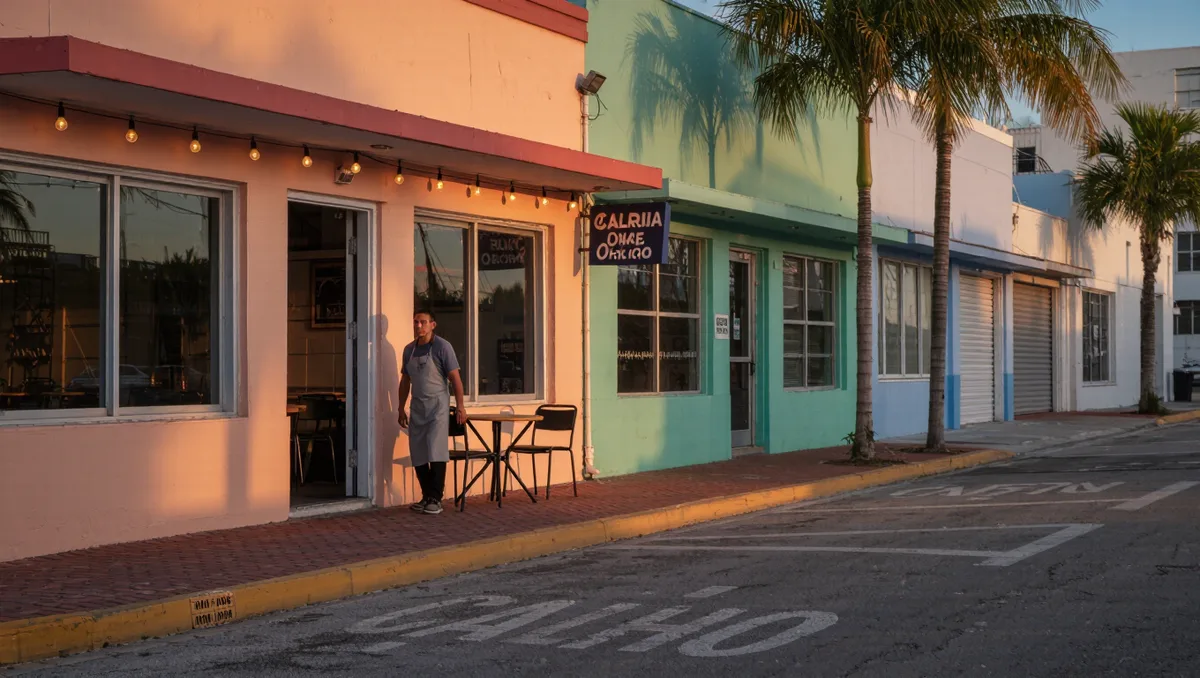
Walk the same block of Little Havana twice, three months apart, and the difference is rarely a banner or a grand opening. It is a different set of names on the door, a later hour on the lights, a table pushed out front where none used to sit. That slow accumulation is what people in the community are describing when they talk about a quiet queer revival in the neighborhood — and it is real, but it deserves careful, honest reporting rather than a list of grand claims.
So here is our answer, stated plainly: the revival is best understood as a social shift, not a shopping list. New LGBTQ-owned and LGBTQ-welcoming spots appear to be changing how the neighborhood feels after dark and on weekends, based on what readers and community members describe. But we will not name venues, owners, or dates we cannot verify against a primary source, and that discipline is the point of this piece. What follows is how to read the change yourself, and how we intend to cover it.
You can follow the rest of our community news coverage as this story develops, because a revival like this one is a running story, not a single announcement.
What does a queer revival actually look like on a block?
It looks like foot traffic that stays later, and it starts with how a neighborhood works in the first place. According to Wikipedia's overview of neighborhood research, a neighborhood is defined both spatially, as a specific geographic area, and functionally, as a set of social networks — the places where face-to-face interaction happens and common values get worked out. That functional half is where a queer revival lives. The buildings may be the same. The networks using them are not.
On a commercial strip, the visible signs tend to arrive in a rough sequence. First, a space changes hands quietly, often with little fanfare. Then the hours shift — a place that closed at six now has a reason to stay open on a Friday. Then programming appears: a trivia night, a reading, a benefit. Finally, the block develops a reputation, and people start arranging their evenings around it. None of these steps requires a press release. All of them are observable from the sidewalk.
What this means for our reporting is that we track the sequence, not just the storefronts. A single new lease is a data point. A pattern of later hours, new programming, and word-of-mouth across several blocks is a story.
Why Little Havana, and why now?
The honest answer starts with the physical fabric. Older, walkable commercial strips with small storefronts are exactly the kind of places where independent businesses take root, because the spaces are affordable relative to newer districts and the street grid puts people on foot, face to face. The research framing above matters here too: neighborhoods generate their character through repeated casual contact, and a dense strip of small shops manufactures that contact by design.
It also starts with Miami's broader pattern. Across South Florida, LGBTQ+ community life has always been distributed rather than concentrated in one district — spread across neighborhoods, community centers, and venues that come and go. When a historic area like Little Havana gains even a handful of queer-owned or queer-welcoming businesses, it extends that map rather than replacing anything. The revival, in other words, is additive. It does not need to displace an existing identity to matter. This connects to our earlier piece, Where the Doors Are Open: A Map of South Florida's LGBTQ+ Centers.
We want to be careful with the word "now." Without verified opening dates and owner statements, we cannot say this year's activity is faster than last year's. What we can say is that the conversation about it has grown louder, and that the conditions of the neighborhood — small spaces, heavy foot traffic, an established culture of family-run businesses — are the kind where such a shift takes hold.
What this means for residents and visitors
If you live in or near the neighborhood, the practical move is simple: show up. Independent businesses survive on repeat visits, not on write-ups. If a spot feels welcoming, keep going back, and bring someone with you. Revivals are built out of ordinary Tuesday nights more than out of any single event.
If you are visiting, treat the strip the way you would want your own block treated. These are residential streets with businesses in them, not a themed district. Park legally, keep noise reasonable on late walks out, and spend money at the long-standing businesses alongside the new ones. A revival that only benefits the newest arrivals is not a revival; it is a turnover.
And if you want the wider context for where community life happens across the region, our guide to South Florida's LGBTQ+ centers shows the institutional layer that sits underneath street-level change like this. For related coverage, see Who Funds Queer Art? A Guide to South Florida's Artist Support Layer.
How we cover a changing neighborhood — our analysis
Here is the part we consider the most important thing in this piece. Coverage of a "revival" can do damage when it gets ahead of the facts. Naming a business as queer-owned before the owner says so publicly violates a principle we hold above all others: identity is the person's own to state. Presence, rumor, or a third party's description is never enough. That is why this article describes a pattern rather than a directory.
It also matters because coverage drives change. A piece that declares a block "the next big thing" can raise rents, invite speculation, and price out the very people who created the character being celebrated. We would rather be early and careful than loud and harmful. When owners confirm their own stories, we will report them with credit, dates, and addresses, in the plain detail this piece is deliberately missing.
Our analysis, for what it is worth: the most durable queer revivals are the ones nobody headlines at first. They are built by people who live nearby, open late, and stay through the slow seasons. Little Havana has the fabric for that kind of change. The rest is a matter of watching, block by block, and telling the truth about what we actually see.
Where the story goes next
The evidence so far establishes a pattern worth watching and nothing more specific, and we think that is the right place to leave it until primary sources exist. If you own or run a spot in the neighborhood and want to tell your own story on the record, our door is open — verification first, publication second. In the meantime, the broader cultural currents behind shifts like this one sit in our culture section, and seasonal gatherings across the region live in our events calendar.
What remains unknown is the timeline and the names. What is established is that the question is now being asked on the street, and that is usually how these stories begin.