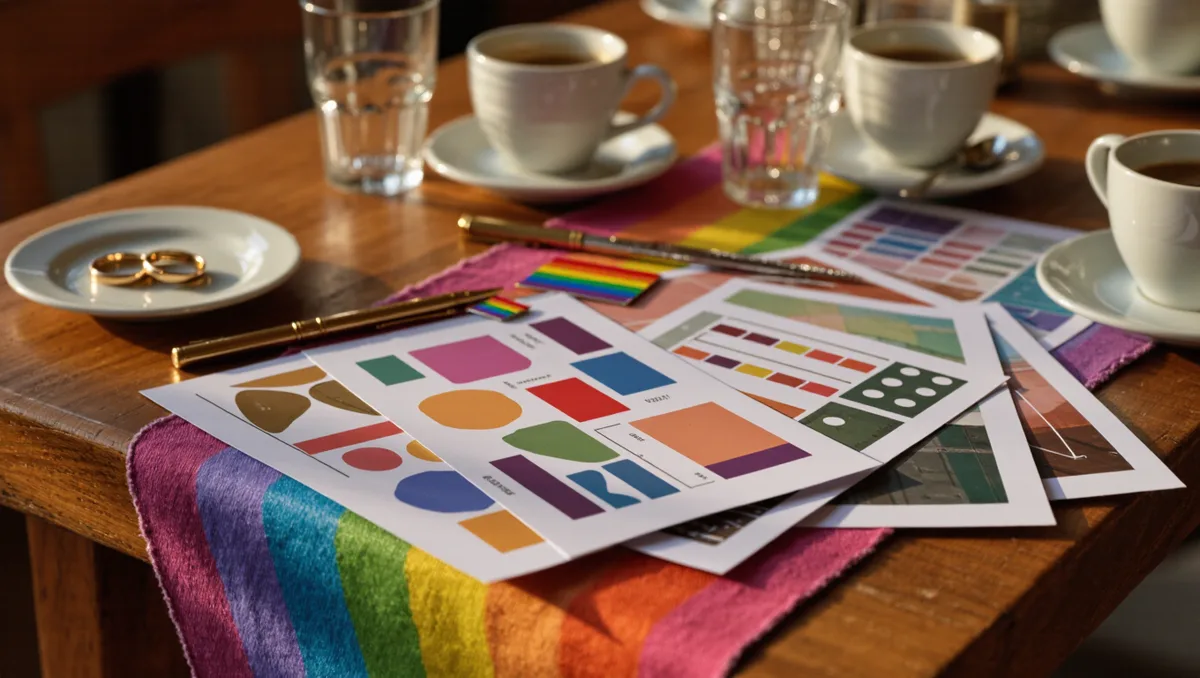
The first decision is not the cake. It is the guest list, and in Miami that decision shapes everything else, because this is a city where a wedding can be twenty people on a garden patio in Wynwood or three hundred in a ballroom on the Beach. The good news for couples planning an LGBTQ wedding in Miami: the infrastructure already exists. Marriage is recognized under federal law, and South Florida venues, planners and county offices have handled same-sex ceremonies for a decade. What takes work is the ordinary stuff every couple faces, plus a few questions queer couples should ask a vendor before signing anything.
This guide walks through that work in order: the legal steps, the venue search, the vendor vetting, the money, and the Miami-specific quirks like hurricane season and event permits. It is written for couples at any point in the process, whether the ring went on last night or the date is already set. For the longer story of how this city became a wedding destination for queer couples, our After Obergefell: How Miami Became a Queer Wedding City piece covers the history.
What legal steps do we need to take in Florida?
The core legal requirement is a marriage license from any Florida county clerk's office, and both partners must appear together to apply. Miami-Dade and Broward counties both issue licenses, and Florida does not require a blood test. There is a waiting period between getting the license and holding the ceremony, though the state shortens or waives it for couples who complete a premarital preparation course, so check the clerk's current rules when you set your timeline. Out-of-state couples should confirm the current waiting-period rules with the clerk's office before booking travel, because the details, not the principle, trip people up.
One practical note: bring the documents the clerk asks for, which typically means government-issued photo identification and proof of your Social Security numbers. If either partner is recently divorced or widowed, the clerk may ask for the date the prior marriage ended. Call ahead rather than guessing. The clerk's office handles these questions every day, and the answers change rarely but do change.
Beyond the license, think about paperwork that outlasts the day. Married couples often update beneficiary designations, leases, insurance policies and emergency-contact forms. A wedding is the emotional milestone; the documents are what make the marriage count when it matters.
How do we find a venue that is genuinely welcoming?
Miami's advantage is density. Within a short drive you have the art deco hotels of South Beach, garden venues in the city's inland neighborhoods, warehouse spaces in Wynwood, and waterfront spots up the coast. The question is not whether a venue will say yes. It is whether the staff has actually run a same-sex wedding before, because experience shows up in small ways: forms that say "Partner A and Partner B" instead of forcing one of you into a bride box, coordinators who ask about your party rather than assuming it.
Ask directly. A venue that hesitates when you say "my husband and I" has answered your question. A venue that answers with examples of weddings it has hosted has answered it better. You can also lean on the community rather than the algorithm: queer-owned businesses cluster in recognizable districts here, and our piece on how Miami's queer business map shifted explains where those clusters sit and how they moved over the years. We covered a connected angle in Two Districts, One Community: How Miami's Queer Business Map Shifted.
Consider the season before you fall in love with an outdoor space. South Florida's rainy stretch runs roughly from late spring into fall, and hurricane season peaks in late summer. An indoor option or a solid weather plan is not paranoia here; it is standard practice for any local event planner.
How should we vet vendors as a same-sex couple?
Photographers, florists, DJs and caterers mostly sell the same product to every couple, so vet them the way any careful couple would, with one extra layer. Look at full galleries, not highlight reels, and ask whether they have shot weddings like yours. Read contracts for language about substitutions and cancellations. Get everything in writing, including arrival times, overtime rates and who controls the playlist after midnight.
The extra layer is simple: state who you are early, in writing, in your first inquiry. "We're two grooms planning a fall wedding" costs you nothing and filters out anyone who would have made your day worse. A vendor's response, or non-response, tells you what you need to know long before the deposit. If you want a shortlist built from community experience rather than search rankings, ask around at the venues and businesses covered in our Miami Beach LGBTQ guide; the same neighborhoods that host your rehearsal dinner often know which photographers show up on time.
One caution on religious-adjacent vendors: some houses of worship and faith-based businesses set their own policies. Our guide to welcoming congregations in South Florida covers the communities that openly affirm queer couples, which matters if a religious ceremony is part of your plan.
What does a realistic budget look like?
Wedding budgets in Miami swing wildly, and anyone who quotes you a single "average" for this market is selling something. What actually drives cost here is predictable: guest count, venue, catering and the date. A Saturday night in peak season costs more than a Sunday afternoon in August, sometimes dramatically so. Alcohol, rentals and lighting add up faster than most couples expect, and South Florida venues often require you to use their in-house caterer or an approved list, which narrows your negotiating room.
Our analysis, reading the local market rather than any national survey: decide your three non-negotiables first, protect them in the budget, and let everything else flex. For many couples that triad is venue, photography and food. Everything else can be adjusted, borrowed, cut or done by a talented friend. Write the numbers down before you tour venues, because touring is where budgets go to die.
What Miami-specific logistics do couples miss?
Three things come up again and again. First, permits and city rules: if your ceremony or after-party touches public space, a beach, a park, a street closure, the City of Miami handles special permits and approvals through its planning and permitting process, and the city's own Planning Department explains which uses need a permit, a waiver or a hearing, with some rezoning-type applications heard on a twice-yearly schedule. Private venues handle their own compliance, but ask the question anyway.
Second, transportation. Miami is a driving city with limited parking, and guests routinely underestimate bridge traffic to the Beach. A shuttle, or a venue with valet, saves you a folder of texts on the night.
Third, the off-season is your friend. Locals know that summer weddings here mean lower prices and empty restaurants for your out-of-town guests, balanced against heat and rain. If your crowd is small and flexible, the value shifts hard in your favor.
Where does a couple start this week?
Start with the license rules, because the timeline is the one thing you cannot negotiate with a venue. Confirm the clerk's current requirements and the waiting period, then pick a rough date that respects hurricane season if you want outdoor space. Then tour venues with your non-negotiables and budget in hand, and say who you are in your first email to every vendor. The rest, flowers, favors, seating charts, is solvable. Miami has spent years building up the muscle for weddings like yours; the planning is mostly about letting the city do what it does well. If you are building the trip into a longer visit, our guides section and the wider pride calendar both keep year-round coverage of the neighborhoods, venues and events that make this city work for queer celebrations in any month.