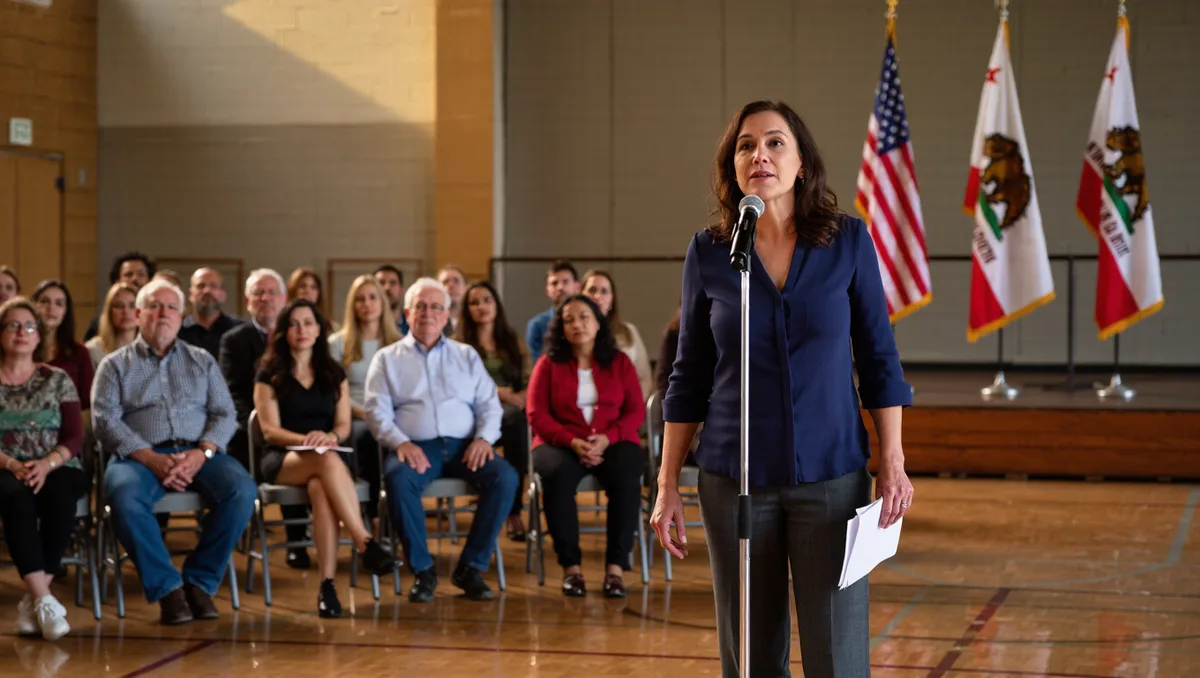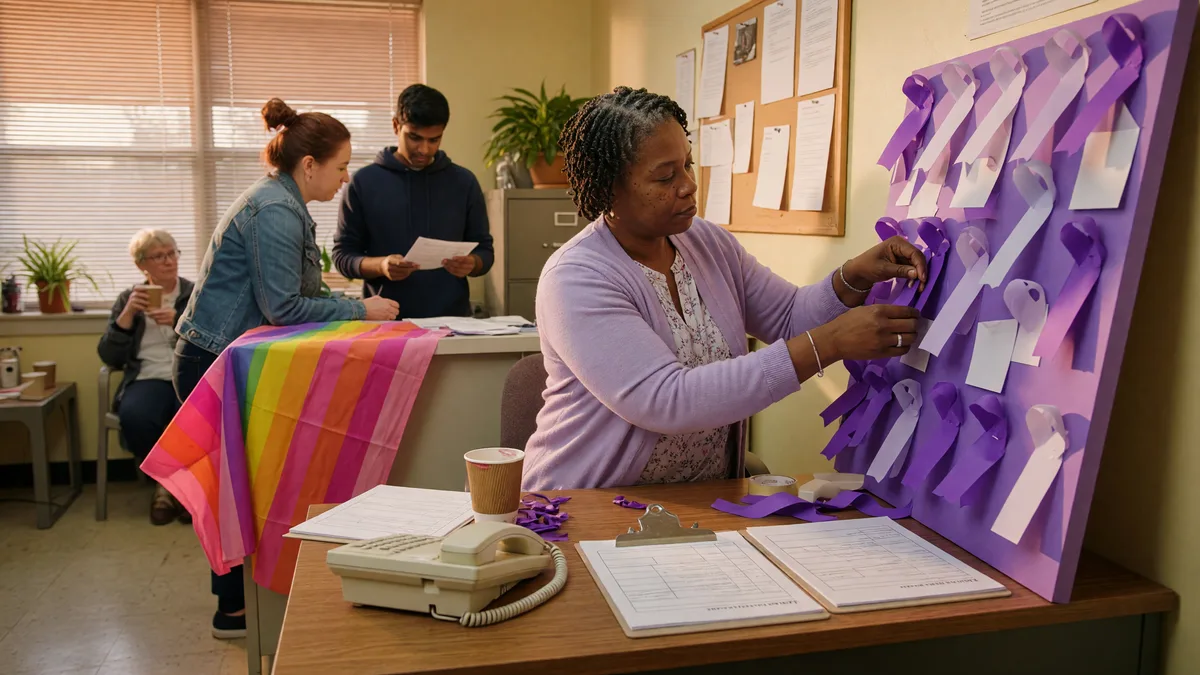
Lewisburg, West Virginia is a long way from Miami-Dade, but the work starting there this month reads like something any community would recognize. Family Refuge Center, a nonprofit serving Greenbrier, Monroe, and Pocahontas Counties, has laid out a full October of events, education, and survivor support for Domestic Violence Awareness Month, according to The Real WV. The announcement matters less as a calendar than as a case study in how a small organization builds community infrastructure.
The details are concrete. FRC runs emergency shelter, a 24-hour crisis hotline, court and medical advocacy, therapy, support groups, supervised visitation and exchanges, and youth and adult education. All services are free, confidential, and open to individuals of all genders. That last part matters for our readers: a domestic violence service model that explicitly serves everyone, without qualification, is the same principle our own community organizations build on. We covered a connected angle in July's Quiet Work: How South Florida Serves LGBTQ+ Youth in Summer.
Community news in any region tends to celebrate the loud moments, the festivals and the proclamations. What FRC's announcement shows instead is the quiet layer underneath: the programs that run every month whether or not anyone is watching.
What is Family Refuge Center actually doing in October?
Four things, per the announcement dated October 2, 2026. First, community education: presentations for schools, civic groups, and workplaces on healthy relationships, warning signs of abuse, and available resources. Second, a "Paint the Town Purple" campaign inviting businesses, schools, and residents to display purple lights, ribbons, and signage. Purple is the national color of domestic violence awareness, and the point is to spark conversations in ordinary places.
Third, survivor support: expanded support groups, trauma-informed workshops, and resource distribution through the month. Fourth, a fundraising and engagement event, a free community self-defense class on Tuesday, October 20th, 6:00 PM to 8:00 PM at NOVA Jiu-Jitsu, 8484 Seneca Trail S. in Lewisburg. Registration opens at 5:00 PM. The class is open to adults and teens of all experience levels and, per FRC, will be taught in a supportive, trauma-informed environment.
Why does a rural nonprofit's month matter to South Florida?
Because the structure is transferable, even if the geography is not. FRC serves hundreds of individuals and families across rural Appalachia, and its executive director, Stephanie Moore, framed the month plainly: "Domestic violence affects every community, and awareness is the first step toward change." She added that the month lets the organization "shine a light on the realities survivors face while empowering our community to take action, support one another, and stand against abuse."
Read those two sentences as a theory of how awareness months should work. The first insists the problem is local, everywhere local. The second treats October as a lever for year-round action, not a substitute for it. FRC's services do not pause on November 1st; the month is designed to recruit the schools, workplaces, and businesses that will carry the education forward.
That is the same logic behind the nonprofit layer our own community depends on, the organizations that keep testing, counseling, and shelter running between the headline events. We have looked before at how South Florida LGBTQ+ nonprofits are funded, and the pattern holds across issue areas: awareness campaigns are the visible tip, sustained service delivery is the base. For related coverage, see Who Pays for the Community? How South Florida LGBTQ+ Nonprofits Are Funded.
What does the service list tell an expert reader?
The list itself is the analysis. Shelter and a hotline address crisis. Court advocacy, hospital accompaniment, therapy, and support groups address the aftermath. Supervised visitation and exchanges address the hardest ongoing reality, that survivors with children often must remain in contact with an abuser through custody arrangements. Youth education addresses prevention.
That is a full lifecycle of response, built by one community-based nonprofit in a three-county rural area. It suggests something about scale: the services that protect the most vulnerable people do not require a large city, only a committed organization and a community willing to participate. FRC's ask of residents is modest and specific: attend events, wear purple, share educational materials, support survivors through donations or volunteerism. Businesses and organizations that want to partner can contact the agency directly; Tyranda Martin, Director of Outreach Services, is listed as the contact for more information.
What happens next, and what remains unknown?
The evidence establishes what FRC has planned through October and what it offers year-round. It does not establish attendance figures, funding levels, or demand for services in the three counties, so any judgment about whether the programs meet local need would go beyond the facts. What the announcement does establish is a model worth watching: one awareness month, used deliberately, to make a permanent safety net more visible to the people who might need it. Communities everywhere, including ours, do well to study how that is done.