When a South Florida LGBTQ+ organization announces a program — youth counseling, senior care, health services — the announcement rarely explains how it will be paid for. The answer is a funding stack assembled over decades: foundation grants, government contracts, signature-event revenue, and the small recurring gifts that most nonprofits count as their most reliable dollars. Understanding the stack explains why the region's community organizations announce what they announce — and why December and June matter so much to their balance sheets.
What are the main funding sources?
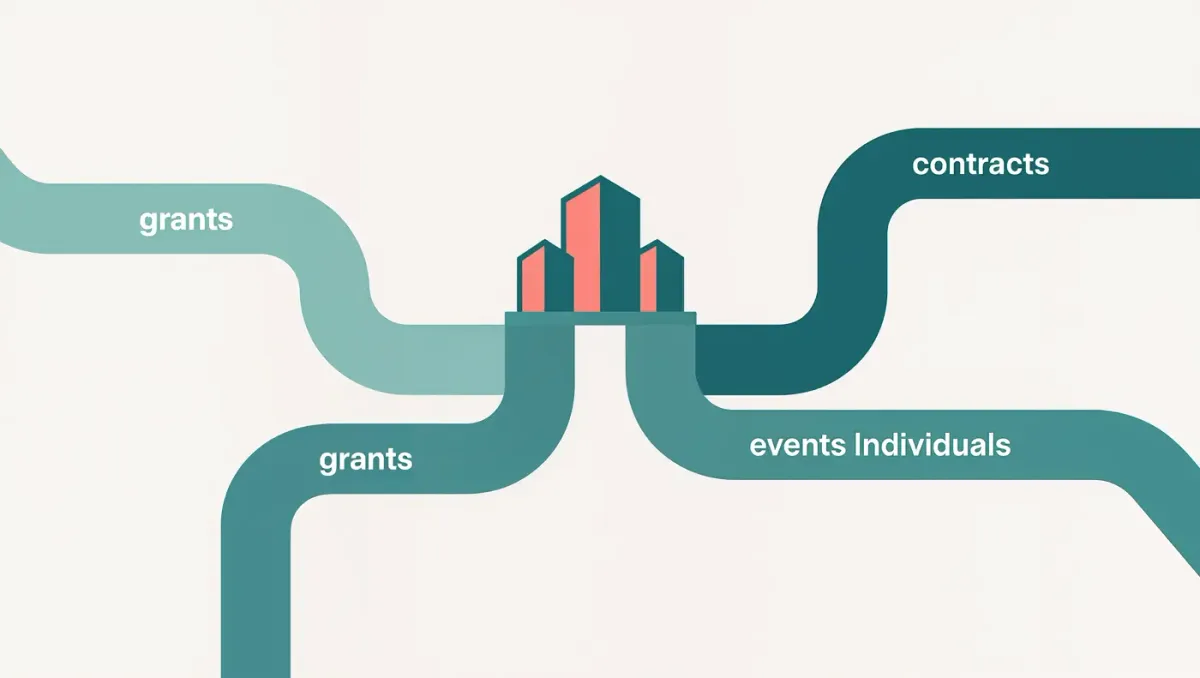
Four, per standard nonprofit finance structure. Foundation grants — from national LGBTQ+ funders and local community foundations — fund programs with defined outcomes. Government funding arrives as contracts and grants for health and social services, where organizations deliver public programs at scale. Event revenue — from the region's signature fundraisers — funds general operations. And individual giving, from major gifts to monthly small donations, provides the unrestricted money that covers what grants do not: rent, insurance, and the unglamorous core.
Why do grants restrict so much?
Because funders buy outcomes. A grant for youth mental health programming pays for youth mental health programming — and typically requires reporting that proves it. The system's virtues are accountability and scale; its known weakness is that the lights stay on only through unrestricted funding, which foundations provide least. Nonprofit finance guidance has emphasized this gap for years: organizations are often grant-rich and cash-poor, with program funding secured and operations funding fragile — the reason a community center's building problem is rarely solved by a program grant.
How do signature events fit in?
As both revenue and advertisement. The region's major fundraisers — from the circuit-scale spring events to pride-season benefits — direct proceeds to community organizations, per organizers' published giving records across recent years. Beyond the dollars, events recruit the donor and volunteer base that individual-giving programs cultivate year-round. The relationship is structural: event proceeds fund services; event audiences become donors; donors sustain the organization between events. It is why community organizations staff pride booths even when the money says the booth costs more than it collects.
What does the calendar do to funding?
It concentrates it. Giving concentrates in December nationally, per GivingUSA's annual data across recent years, and in June for LGBTQ+ causes — meaning the community's organizations bank most of their year in two months and budget across ten. Year-end campaigns, pride-season appeals, and matching-gift windows are not marketing noise but the financial calendar itself. For donors, the practical corollary: a recurring monthly gift in March is worth more to an organization than a larger one in December, because it arrives when nothing else does.
How can a donor give effectively?
Per nonprofit-sector guidance, consistently applied: give unrestricted where possible — general operating support is what organizations say they need most; give recurrently rather than once; check the organization's published filings for scale and transparency; and consider the small organizations that deliver specialized services but lack development staff. The region's community organizations serve thousands annually on budgets that would not fund a single corporate department — the funding stack holds, but it holds on the small donors who never make the announcement.