Pride Month happens in June because the uprising that started it all did. In the early hours of June 28, 1969, patrons and neighbors fought back against a police raid at the Stonewall Inn, a gay bar in Greenwich Village. One year later, to the day, marchers took to the same streets to mark what had happened — and the anniversary became a tradition.
That first march in 1970 was a protest, not a party. Organizers had no permit, and the point was visibility: to say, out loud and in public, that LGBTQ+ people existed and would not apologize for it. Over the following decades, the anniversary grew into a month of marches, festivals, memorials and community gatherings held across the country and around the world.
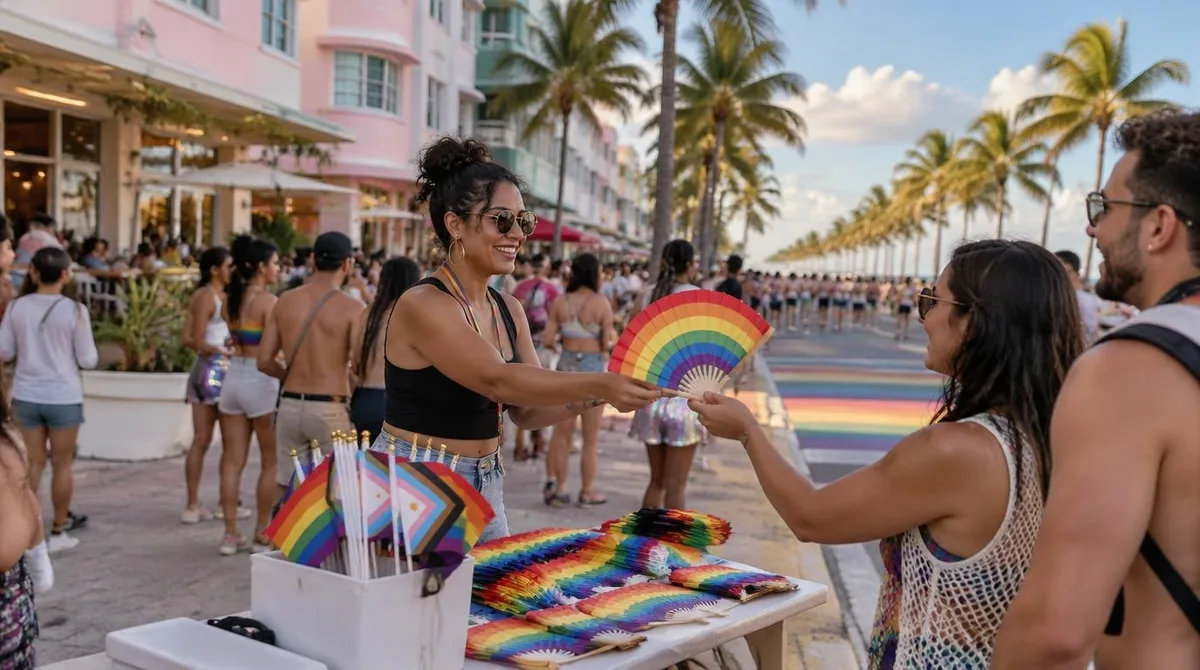
The month carries both halves of that inheritance. June is celebration — drag brunches, street fairs, rainbow crosswalks. It is also remembrance and, often, protest. Both are authentic. The tension between them is not a flaw in Pride; it is the history showing through.
What actually happened at Stonewall?
In 1969, bars that served gay customers operated under constant threat. Police raids were routine, and being arrested or even identified at one could cost someone their job, their family or their safety. When officers raided the Stonewall Inn that June night, the crowd outside refused to scatter. The resistance continued for days and drew wider attention to how LGBTQ+ people were treated under the law.
The uprising was not the first of its kind — earlier actions in other cities helped set the stage — but it became the one the movement gathered around. Its anniversary gave organizers a fixed date, a shared story and a reason to gather every year. Our primer on Stonewall's legacy and what 1969 means in Miami traces how that history landed here, in a city with its own fights and its own milestones.
How did one march become a whole month?
The first anniversary march in 1970 set the pattern: gather in late June, march visibly, connect the past year's struggles to the original moment. As more cities held their own anniversary events, the single day stretched into a weekend, then a week, then a month of programming. June became the natural container because the Stonewall anniversary sits at its end.
Organizers have kept the protest roots close. According to Time Out New York, New York City organizers still call the event The March rather than the parade, a deliberate nod to its heritage as an unpermitted political demonstration. The same reporting traces the lineage directly: the first march was held in 1970, one year after the Stonewall Uprising, and has grown into an annual civil rights demonstration.
Scale changed along the way. What began as a handful of contingents now fills an avenue for hours. The March in New York has grown in recent years to include more than 700 groups with millions of spectators, per Time Out, and ABC7 New York reported that more than a million people lined the 2026 route, forming what the station described as a sea of vibrant colors. Similar growth played out in cities across the country, Miami included.
What does a modern Pride Month actually look like?
The shape varies by city, but the pieces are recognizable everywhere. There is usually a march or parade, a street festival, events for youth and families, fundraisers, and moments of remembrance. According to NYC Pride, its calendar includes PrideFest — described as the largest LGBTQIA+ street festival in the U.S. — along with a free Youth Pride celebration, a family-friendly festival zone, and a fundraising brunch whose proceeds support the organization's work creating safe spaces for the community.
Notice what that list contains: small businesses, nonprofits, writers, health resources, kids. Pride Month is a working month for community infrastructure, not only a party. Organizations use the visibility to recruit volunteers, raise funds and connect people to services they may need the other eleven months of the year.
Themes matter too. NYC Pride's 2026 theme, "For All of Us," drew on a quote long attributed to Stonewall veteran Marsha P. Johnson: "There is no pride for some of us without liberation for all of us." Organizers said the theme centers trans and non-binary community members facing attacks at every level of government, according to Time Out. That is the protest half of June doing its work.
Why does Pride still need to be a protest?
Because the calendar keeps proving it. In February 2026, the federal administration removed the Pride flag from the Stonewall National Monument, the site marking the uprising's history. ABC7 New York covered the rallies that followed and reported in April that the administration agreed to keep flying the rainbow flag at the monument after activists called the removal a targeted affront to a site central to the community's fight for visibility. A flag over a historic monument became a national story — in the birthplace of Pride, in the month's lead-up.
That episode explains why so many Pride events keep their political edge. Visibility is not the same as safety, and celebration is not the same as equality. When organizers choose themes about the most marginalized, or rally at the site of the original uprising, they are using the month's built-in audience to keep pressure on real issues.
Our analysis: the healthiest way to read June is as a battery, not a birthday cake. The month concentrates attention, money and energy so community organizations can draw on them year-round. That is certainly how South Florida treats it — our guide to why Miami celebrates Pride twelve months a year lays out the local calendar beyond June, from Transgender Day of Visibility in March to World AIDS Day in December. This connects to our earlier piece, World AIDS Day in Miami: How December 1 Is Kept Here.
What does Pride Month mean in Miami specifically?
Miami's relationship to June runs through its own history. In 1977, Dade County became a national battleground over an ordinance protecting gay people from discrimination, and the campaign that followed — and the community's response to it — helped shape LGBTQ+ politics far beyond South Florida. Our account of how Miami fought back in 1977 tells that story in detail.
Today, the region spreads its celebration across the year: Miami Beach Pride in the spring, Wilton Manors events, neighborhood festivals and a dense network of health and youth services. June remains the national anchor — the month when the Stonewall story gets retold and new generations hear it — but the work here never hibernates. If you are new to the calendar, our guide to the South Florida pride season, explained maps the whole year. Readers following this should also see South Florida Pride Season: The Year-Round Calendar, Explained.
Where Pride Month goes from here
The through-line from 1969 to now is simple: public visibility, on purpose, in the streets where the community was once hunted. The forms keep changing — street festivals, youth events, televised marches, themed campaigns — but the reason stays fixed on the calendar. June is when the community marks how far it has come and says plainly how far it still has to go. Both sentences belong in the same month, and both get said every year.