Annapolis in autumn runs on two calendars. There is the big one — the waterfront festivals and seasonal fairs that show up in every search for Annapolis fall events — and there is the small one: church bazaars, school pumpkin sales, neighborhood block parties, and oyster roasts that run on volunteers and a noticeboard. According to Eye On Annapolis, the smaller events give a more personal view of the city, and the case is worth taking seriously.
Our read after going through the argument: it is half right, and the half that is right matters. Small gatherings do reveal how a place actually works. But the guide glosses over the real trade-offs — access rules that vary, cash-only farm stands, schedules that may never make it online — and a visitor who shows up expecting an open door may find a residents-only party instead. The guide itself says so, which is to its credit.
There is also a second half to the piece that deserves its own verdict: a self-guided architecture walk that asks you to look one or two floors above the storefronts. That advice is simple, free, and hard to argue with. For readers who use our guides to plan trips beyond South Florida, the combination — one small event, one slow walk — is a reasonable template, with a few caveats. For related coverage, see Schools and South Florida's LGBTQ+ Youth: What Support Looks Like Now.
Do small community events really beat the big festivals?
The guide's core claim is that large festivals take the publicity while smaller events take the texture. It describes church bazaars that combine baked goods, second-hand books, handmade crafts, and simple lunches in one modest space — closer to a community open house, in its words, than a commercial festival. Volunteers cook instead of caterers. Residents donate goods. Local musicians play for familiar audiences.
That picture is persuasive as far as it goes, and it tracks with something we see in our own coverage: the events that hold a community together are rarely the ones with a promotional campaign. A purchase at a bazaar may support building repairs, food assistance, youth programs, or a local charity — the guide attributes this to the churches themselves, and it is the right framing. The money is the point, not a bonus.
Here is the skepticism. The guide admits these events are hard to find: schedules may appear on a church noticeboard or a neighborhood social media page instead of a tourism website. That is not a small logistical wrinkle; it is the whole problem for a visitor. If the reward requires a search strategy across libraries, bulletins, school pages, and farmers' market announcements, most travelers will default to the big festival — and the guide's own framing explains why they do.
What are the trade-offs the guide doesn't dwell on?
Three, and the source names all of them briefly before moving on.
- Access is ambiguous. Some block parties are private gatherings for residents; others invite the wider community. The guide advises checking neighborhood association pages or signs near the entrance before arriving, and notes that respecting the distinction prevents an uncomfortable arrival. Fair — but that puts the homework on the visitor.
- Volunteer-run means fragile. Farm visits reward early planning because parking may be limited, card payments may not be available, and activities may depend on weather. Farms can also sell out of pumpkins later in the day. The guide recommends checking the farm's own website or social media before leaving. Sensible, unglamorous advice.
- The food carries social meaning, not just a plate. People attend oyster roasts and seafood suppers to maintain organizations — museums, sailing groups, restoration projects, rescue groups — that serve the Chesapeake Bay area year-round. The guide is right that a visitor gains more by understanding what a ticket supports. We would put that point first, not last.
Church events get a specific etiquette note: approach as guests rather than consumers, ask volunteers for recommendations. That is good advice, and it applies well beyond Annapolis. We made a similar argument in our piece on Welcoming Congregations: Where Faith and Pride Meet in South Florida — a congregation's open house tells you more about a community than its festival booth does. This connects to our earlier piece, Welcoming Congregations: Where Faith and Pride Meet in South Florida.
Is the architecture walk actually worth it?
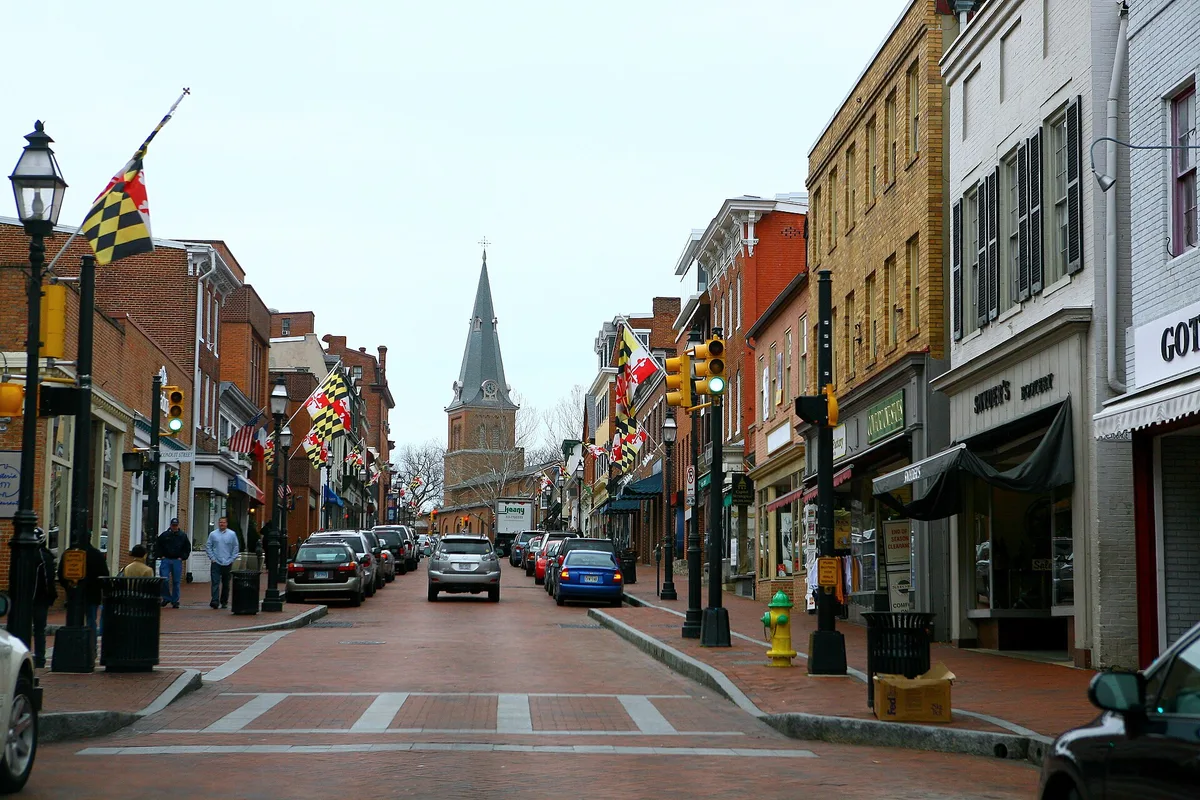
Yes, and it is the most defensible part of the piece. The observation is that most people walk downtown at storefront level — menus, displays, flags, sidewalk signs — while the revealing details sit above: cornices, dormers, brick patterns, window frames, faded signs. The route needs no museum ticket or specialist knowledge. It only asks you to slow down and look upward.
There is nothing to debunk here because there is nothing to buy. The advice costs nothing, requires no reservation, and cannot sell out. If the rest of the guide is a pitch with caveats, this is a plain instruction. The one honest limitation: the guide offers no specific buildings or streets, so the walk is a habit rather than a route. You bring your own attention; the city supplies the details.
How should a visitor actually plan the day?
The guide's own suggested shape is the best available answer: begin with a small community event outside the busiest tourist streets, then return downtown for the architecture walk. To that we would add the guide's own warnings as a checklist. Confirm the event is open to the public. Check the farm's or organizer's page before leaving. Bring cash where cards may not work. Go early where parking is tight.
The deeper question the piece raises — and answers only implicitly — is what a visitor is for. At a bazaar or an oyster roast, a visitor is a guest and a small source of support for organizations that operate all year. At a major festival, a visitor is a customer. Both roles are legitimate. The guide argues the first is more revealing, and on the evidence it presents, that holds — provided you do the checking it recommends.
What the evidence does not settle: whether these small events are findable in practice for someone without local ties, since the source describes discovery channels but names no specific 2026 dates, venues, or organizers. Treat the piece as a method, not a calendar. The same method travels — it is close to how we think about covering events and community news here: the small, volunteer-run gathering is where a place tells the truth about itself, if you can find it and if you are wanted.