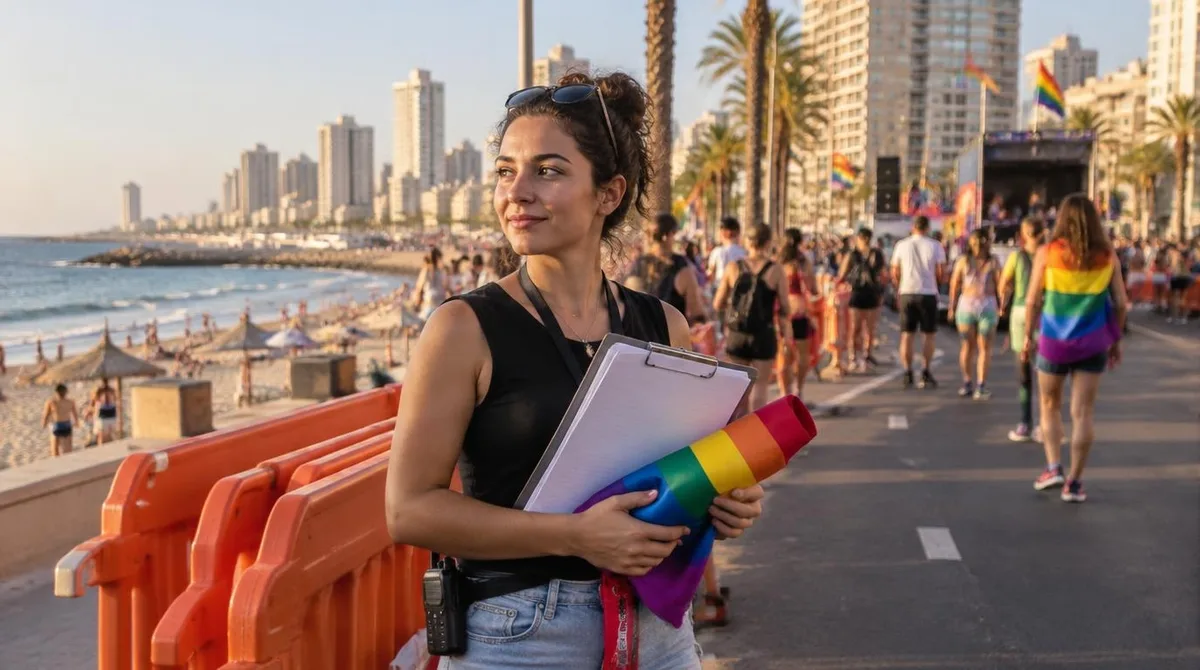
The Israel Pride festival is the umbrella term for the LGBTQ+ pride celebrations held across Israeli cities, with the country's best-known events centered in Tel Aviv and additional celebrations in Jerusalem, Haifa, and other communities. Unlike Miami's calendar, where Pride Month 101: Why We Celebrate in June explains why June dominates, Israeli pride events have historically clustered around different months depending on the city, so the first thing to know is that there is no single date and no single festival. Each city runs its own program under its own organizers.
For Miami readers, the closest comparison is the one our own calendar already teaches: pride is a network of local celebrations, not one national event. Our South Florida Pride Season: The Year-Round Calendar, Explained makes the same point closer to home, and it applies abroad too. Before attending or covering any Israeli pride event, the reliable move is the one we recommend for every festival: check the organizer's own announcements, because dates, routes, and security arrangements change year to year. Readers following this should also see South Florida Pride Season: The Year-Round Calendar, Explained.
What is the Israel Pride festival, exactly?
There is no single body called the Israel Pride festival. The phrase usually refers to the seasonal round of pride events across the country, most prominently the large street celebration and parade associated with Tel Aviv, alongside distinct events in Jerusalem and other cities. Each is run by local organizers, and each carries its own character. Tel Aviv's celebration is known internationally for its beachside, party-forward atmosphere. Jerusalem's has historically carried a more political tone, reflecting the different social climate of that city.
That split matters for anyone trying to understand the topic. A pride festival is never just a party; it is a public claim about who belongs in a city's streets. Readers who want the mechanics of how parades reshape a host neighborhood can see the same dynamics at home in Understanding Pride Parade Routes: Maps and Neighborhood Impacts in Miami.
How does it relate to LGBTQ pride celebrations worldwide?
The Israeli festivals grew from the same broad tradition as pride events elsewhere: public visibility, community gathering, and commemoration of the LGBTQ+ rights movement. The shared vocabulary is recognizable from Miami — the parade, the festival grounds, the community booths, the visibility politics. What differs is local context. Israeli pride events take place in a country where the legal and social position of LGBTQ+ people differs sharply from neighboring countries in the region, which is part of why the Tel Aviv celebration draws international attention and international visitors.
At the same time, organizers and participants in Israel debate the same questions our community debates here: commercialization, political framing, and who the celebration is for. Those arguments are a reminder that pride is a living civic event everywhere, not a fixed ritual. Our own pride coverage returns to that theme year-round.
Why does Israel Pride draw controversy?
Honest coverage means saying plainly that these festivals sit inside political arguments. Critics abroad sometimes frame the events through the broader Israeli-Palestinian conflict, while some Israeli LGBTQ+ activists criticize their own country's record on issues affecting the community. Supporters point to the visibility and scale of the celebrations themselves. This article takes no side in those disputes; the point for a community publication is that pride festivals everywhere are political acts, and readers should expect the Israeli ones to be discussed in political terms.
What this means in practice: if you read coverage of an Israel Pride festival, check who is speaking. An organizer's announcement, a participant's account, and a government statement are three different kinds of claim, and they should be weighed differently — the same discipline we apply to organizer-supplied claims in our own community news reporting.
What should a Miami traveler or curious reader actually do?
Practical steps, in plain order:
- Identify the city and the organizer. Tel Aviv, Jerusalem, and Haifa events are separate operations with separate websites and schedules.
- Confirm the date from the organizer directly. Israeli pride events have not all fallen in June, so assuming the Miami calendar travels is a mistake.
- Note security arrangements. Large public gatherings in Israel typically carry security measures that differ from what festivalgoers expect in South Florida; organizers publish guidance, and it is worth reading before you go.
- If you cannot attend, follow the organizers' own channels for accurate accounts rather than secondhand summaries.
Travelers should also remember that public LGBTQ+ expression carries different social risks in different places. That is not a reason to hide; it is a reason to prepare, the same way our Planning Your First Pride Parade: What to Bring and How to Stay Safe guide treats preparation as part of the celebration.
Our analysis: what the comparison teaches Miami readers
The useful takeaway is not a ranking of festivals. It is that the Israeli celebrations show, at international scale, the thing our own calendar shows locally: pride is decentralized, seasonal, and locally owned. There is no world pride office that hands down a date. Communities build their own celebrations against their own circumstances — which is exactly how South Florida's year-round calendar came to exist, from June's headline events to the observances that keep the community visible the rest of the year.
On the word itself, precision helps. As Cambridge Dictionary frames it, to know something is to perceive it "as fact or truth" — and with a topic this scattered across cities and organizers, the honest version of knowing means checking primary sources rather than repeating a single secondhand summary. That standard guides this publication's coverage of every festival, here and abroad.
What the evidence establishes is the structure: multiple city-level celebrations, distinct local characters, and organizer-run scheduling that changes year to year. What remains unknown in any given year is the specific program, and that is exactly what the organizers' own announcements exist to answer.