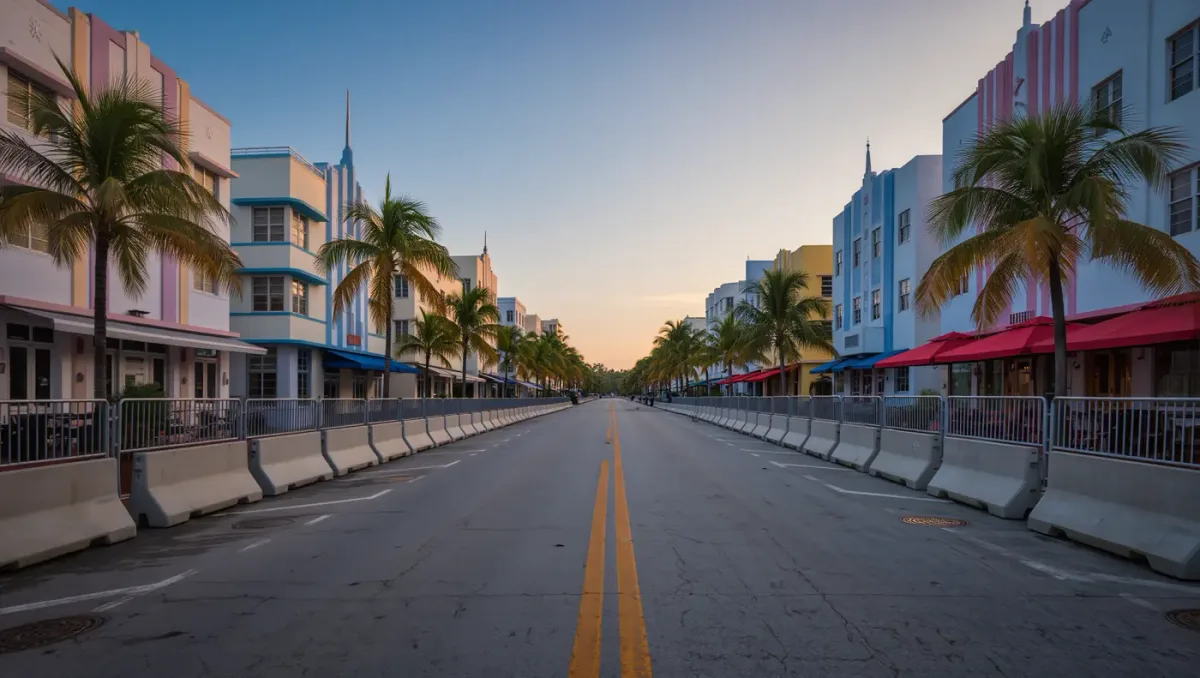
When Ocean Drive closes for a pride parade, the closure is the visible end of a municipal operation that began months earlier: special-event permitting, traffic engineering, police staffing plans, fire and medical deployment, and inter-agency coordination that involves city, county, and sometimes state assets. The operation is invisible when it works — and it works most of the time. How South Florida's cities plan security for the community's largest events is worth understanding, both for attendees' practical decisions and for the civic relationship the planning embodies.
What does the permitting process require?
Per municipal special-event procedures, an application months ahead triggers a multi-department review: traffic plans with closure schedules and detour routes, sanitation plans, alcohol licensing where applicable, insurance requirements, and — central to the security question — a public-safety plan reviewed by police and fire. Per the region's cities' published event ordinances, organizers pay for municipal services on scaled schedules, and the city's special-event committee signs off only when the plan closes. The parade route itself is negotiated geometry: crowd capacity, viewing sightlines, and emergency access lanes all shape which streets close and how.
How is the policing actually planned?
As staffing arithmetic plus posture. Per standard municipal practice, event policing assigns officers to fixed posts and mobile details based on crowd projections, with command structures that coordinate city police, county sheriff, and fire-rescue in a unified structure for the weekend. The posture question — how visible, how armed, how interactive — has evolved across recent years nationally, with community input shaping policies from barricade placement to liaison practices, per the cities' own community-engagement records. The community's relationship with event policing is itself part of the plan: liaison structures exist precisely because the history between the community and police required institutional repair.
Related stories: Who Owns the Street? How Festival Permits and Road Closures Actually Work · Peak Season: What the Community Should Know Before the Storm.
What about the threat environment?
Seriously, and increasingly layered. Per public-safety practice across recent years nationally, large public events now carry threat-assessment processes — intelligence sharing between agencies, perimeter design, vehicle barriers at open-street events — adopted after attacks on public gatherings worldwide changed the standard playbook. The concrete barriers at festival entrances are the visible result. Cities do not publicize specific measures, per security practice, but the general architecture is standard: vehicle standoff, screening points, medical surge capacity, and evacuation plans rehearsed before the event.
What should attendees actually do with this knowledge?
Three practical things. Know where the medical and information tents are when you arrive — they are the plan's human interface. Note the emergency access lanes and keep them clear; those gaps in the crowd are design, not accident. And follow the event's published entry rules — bag policies and screening points exist as part of the security architecture, and compliance is what keeps the checkpoints moving. The attendees who read the plan's surface get through the weekend fastest.
Why does this civic operation matter to the community?
Because it is the municipality acting on the community's behalf at scale. The security operation is the city committing public resources — police, fire, public works — to the community's biggest public moments, and the relationship it embodies has deepened over decades from antagonism to institutional partnership, per the documented arc of the region's civic history. Every safe parade weekend is, in that light, a small civics lesson: the city and the community, planning together, executing in public, and then doing it again next year.