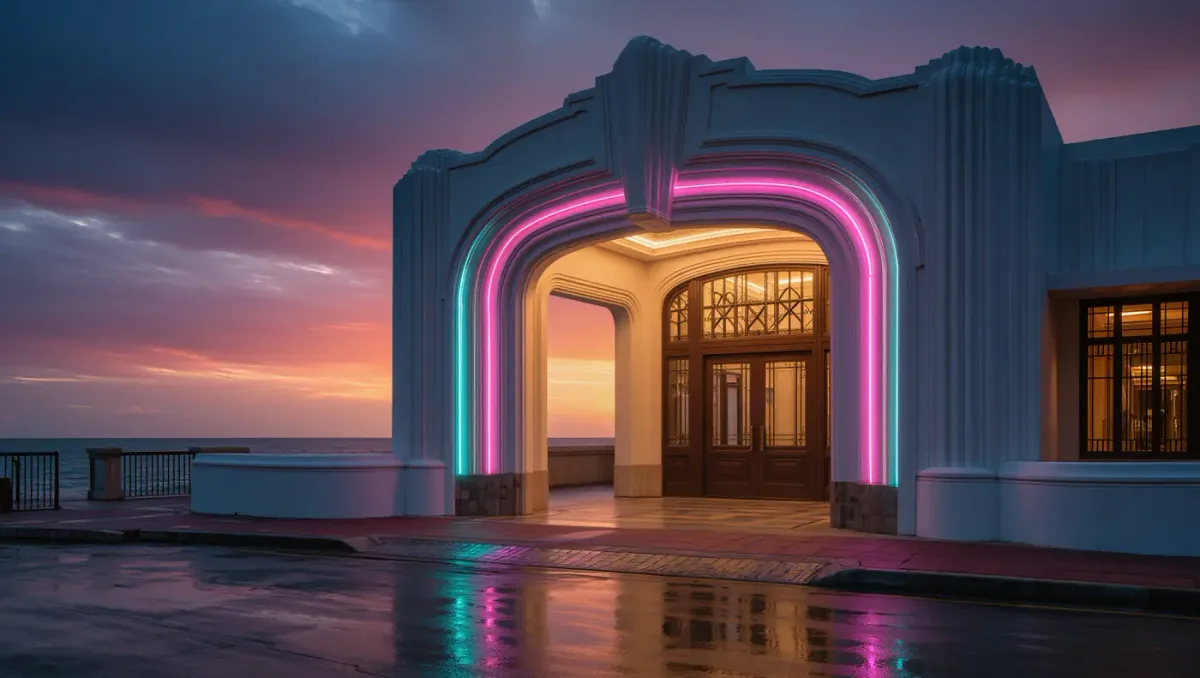
On Ocean Drive, between the art deco facades and the beach traffic, the Palace has run drag shows on its sidewalk-facing stage since 1992 — per the venue's own history, an unbroken run that makes it one of the longest-operating drag venues in the southeastern United States. Its longevity explains its role: for millions of visitors, the Palace is the first live drag they have ever seen; for South Beach, it turned the neighborhood's queer identity into an open-air daily spectacle visible from the public sidewalk.
How did the Palace start?
The venue opened in the early 1990s, as South Beach's queer-led revival was turning the neglected beach strip into a destination, per documented neighborhood and venue histories. Its founding insight was geographic: Ocean Drive's sidewalk crowd — beach traffic, tourists, rollerbladers — was already a spectator audience, so the Palace put its stage and its drag performers at the glass line facing the street rather than hidden in a back room. The shows became free-adjacent theater: ticketless tourists stopped, stayed, and became the audience that made the venue a fixture.
What is the Palace's role in Miami drag history?
Institutional. The venue's daytime and brunch shows created steady, visible employment for generations of South Florida drag performers, and its sidewalk format — drag performed in daylight, to mixed audiences including families and straight tourists — normalized the art form in public years before mainstream television did the same nationally. Performers who built followings at the Palace carried Miami drag onto national stages and television casts in later years, per public performer histories. The venue also anchors the beach's Halloween and pride programming, running some of its biggest shows of the year during those seasons.
How did it survive when so much of the scene closed?
Through the format's economics and the location's permanence. Drag brunch and daytime shows diversified the venue's revenue beyond nightlife's late hours, and the Ocean Drive location — tourist traffic every day of the year — made the shows a repeating attraction rather than a scene-dependent one. The pandemic years tested every South Florida venue; the Palace's sidewalk model, with open-air seating on a wide public street, adapted to distancing constraints better than interior clubs, per contemporaneous reporting on the period. Its survival through 2020 made it, alongside a handful of others, a legacy institution of the old beach scene.
What does the venue mean to the community versus tourists?
Different things, simultaneously. To visitors, it is entertainment — a vacation spectacle with a strong tail wind of novelty. To the community, it is employment and infrastructure: one of the few venues where drag work is steady, visible, and unionized by nothing but reputation, and a stage that has launched careers. The dual identity is the venue's ongoing balancing act — tourist pricing and neighborhood loyalty — and its three decades suggest the balance holds.
Why does one bar deserve a history?
Because visibility compounds. A generation of Americans' first exposure to drag came through Miami vacations and a sidewalk stage on Ocean Drive; attitudes followed exposure, in ways no campaign could buy. The Palace's legacy is not one show or one performer — it is thirty-plus years of making drag ordinary on one of the country's most-watched streets, which is cultural work of a very high order.