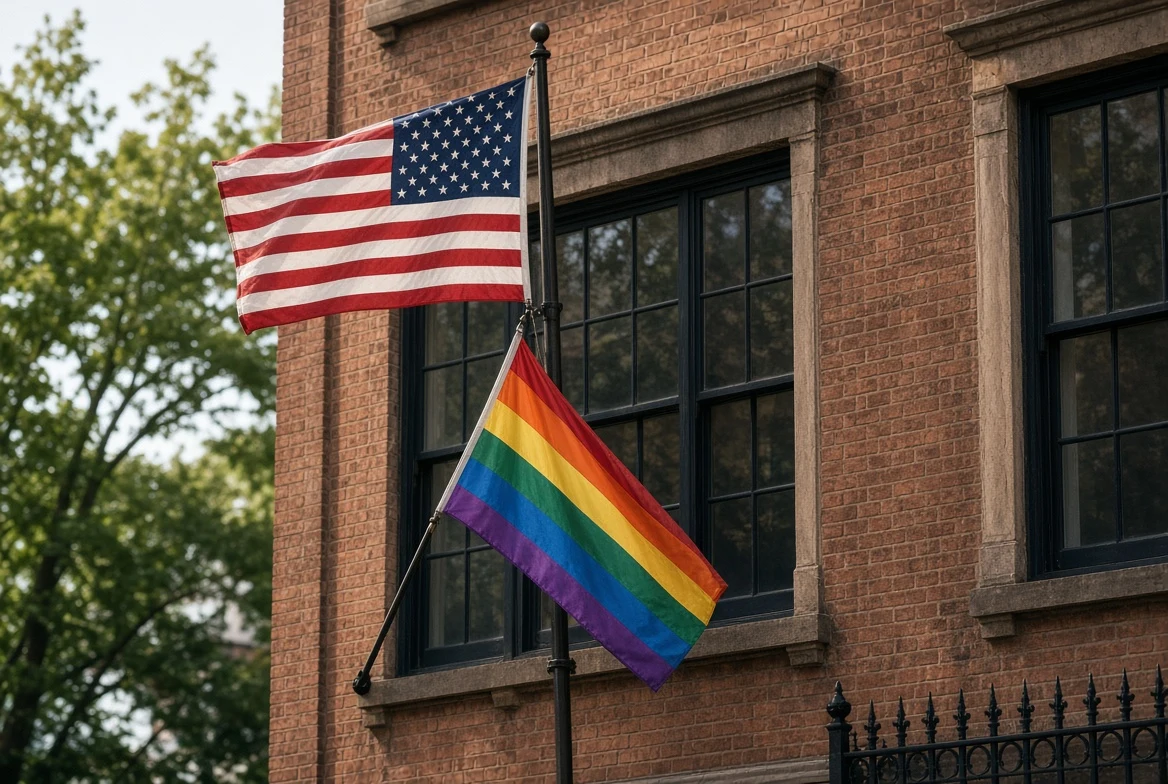
The rainbow flag you see over businesses in Miami Beach and Wilton Manors is only the most famous entry in a much larger vocabulary. Since Gilbert Baker sewed the original rainbow flag in San Francisco in 1978, the community has added dozens of designs — each for a specific identity — and, in 2018, designer Daniel Quasar combined several of them into the Progress Pride Flag, per the design's own documentation. Knowing which flag is which changes what you are seeing at a Miami festival, a city hall, or a storefront on Ocean Drive.
This explainer covers the flags most often flown in South Florida, who created them, and when. It publishes information, not advice on symbolism or usage — flags mean what communities make of them.
What does the original rainbow flag mean?
Gilbert Baker, an artist and drag performer, created the rainbow flag for San Francisco's Gay Freedom Day parade in June 1978. The original design had eight stripes, each assigned a meaning — from hot pink for sex to violet for spirit — and was reduced over time to the six-stripe version now recognized worldwide: red, orange, yellow, green, blue, and violet, per widely documented flag histories. Baker, who was openly gay throughout his public life, refused to trademark the design, which is one reason it spread everywhere, including Miami's storefronts long before corporate adoption.
Where did the Progress Pride Flag come from?
In 2018, Oregon-based designer Daniel Quasar reworked the rainbow into the Progress Pride Flag: a chevron on the left edge carrying the light blue, pink, and white stripes of the Transgender Pride Flag, plus black and brown stripes representing people of color in the community and those lost to or living with AIDS. The chevron points right, toward the future, per Quasar's own description of the design. Miami Beach and other local governments began raising the progress design alongside the rainbow in recent years, and it has become the default flag at many South Florida civic buildings during Pride Month.
What is the Transgender Pride Flag?
Monica Helms, a transgender woman and U.S. Navy veteran, created the Transgender Pride Flag in 1999 and first flew it at a Phoenix pride in 2000, per her own public accounts. Its five stripes — light blue, pink, white, pink, light blue — are designed so the flag reads correctly whichever way it flies, which Helms has described as a statement about finding correctness in one's self. In South Florida it appears most visibly during Transgender Awareness Week each November and at the Transgender Day of Remembrance vigils on November 20.
What other flags will I see at Miami events?
A short field guide: the Bisexual Pride Flag, with pink, purple, and blue stripes, dates to 1998 and appears around Bisexuality Visibility Day on September 23. The Lesbian Pride Flag in its current orange-to-magenta gradient form has circulated since the late 2010s. The Pansexual and Asexual flags, in pink-yellow-blue and black-gray-white-purple respectively, round out the set you are most likely to spot at Wynwood Pride or community center events. The Intersex Progress Flag, adding a yellow field with a purple circle for intersex people, was created by Valentino Vecchietti in 2021 and has begun appearing at institutional flag-raisings.
Why do flags matter so much in Miami specifically?
South Florida's community is heavily Latino and Caribbean, multilingual, and spread across several cities rather than concentrated in one neighborhood — which makes visual symbols unusually efficient as signals of welcome. A flag in a shop window in Little Havana or a bar in Wilton Manors communicates across language barriers. City flag-raisings also carry local weight: when Miami Beach or Miami-Dade raises a pride flag at a government building, it is a public, photographable commitment by the jurisdiction, which is why the flag choices themselves — rainbow versus progress design — have been part of local civic conversation in recent years.
Is one flag 'the correct' flag now?
No. The rainbow and the progress design coexist deliberately: the six-stripe rainbow remains the broad community banner, while the progress and intersex variations make specific groups visible within it. Organizations and individuals in Miami fly different combinations depending on context, and the community's own events reflect that mix rather than a single official choice.