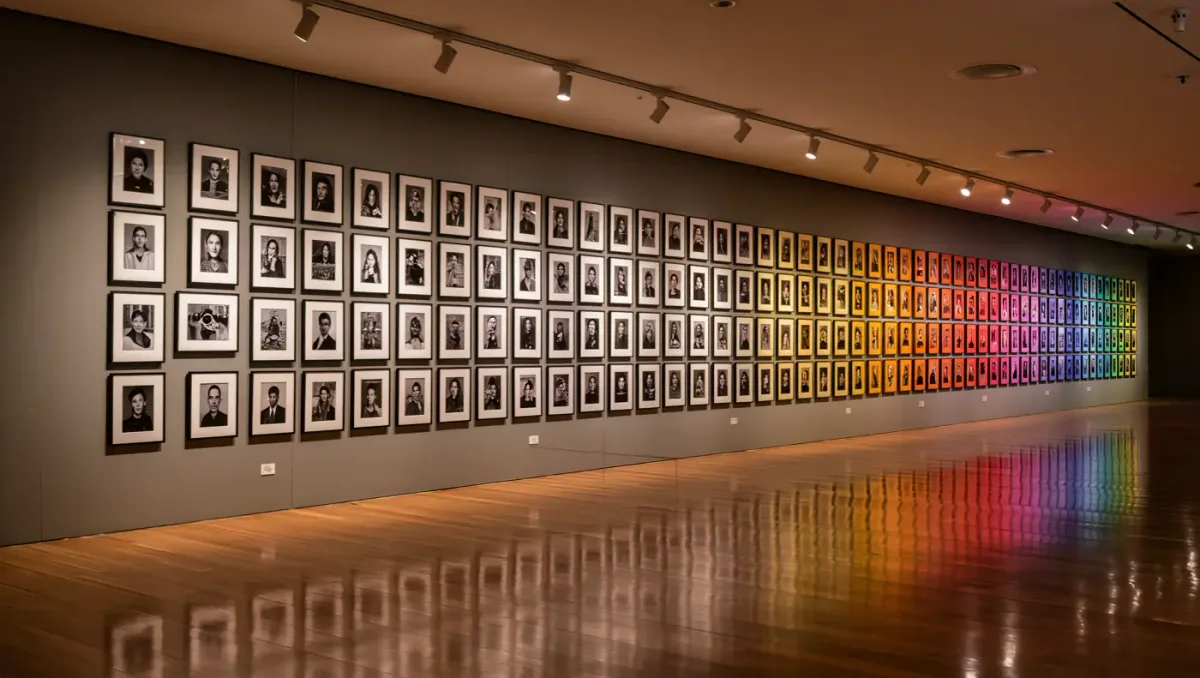
Lay five decades of South Florida pride photographs side by side and the community's history reads itself: the 1970s marches with their handmade signs and small brave crowds, the 1980s frames darkened by crisis-era fundraising and mourning, the 1990s beach parades swelling with the revival's confidence, the 2000s corporate banners arriving, the 2010s festivals filling Lummus Park, the 2020s masks and then the record crowds after. The photographs — held in press archives, museum collections, and community members' own albums — are the region's pride history in primary form. Reading them well takes a method.
Where are the oldest South Florida pride photographs?
Scattered, and therefore precious. The region's earliest pride-era marches of the 1970s were modest affairs, documented sparsely — some by alternative weeklies and early community newspapers, some by participants' own cameras. Per archival practice, press archives and HistoryMiami's collections hold portions; the rest survives in private collections where it exists at all. The first lesson of pride-photograph history: the record is thinnest exactly where the history was most precarious, because photographing a march in 1977 Miami carried a real cost that only the committed paid.
What do the crisis years look like in photographs?
Doubled: celebration and mourning in the same frames. The 1980s pride photographs show the festivals continuing while their margins change — memorial sections, fundraiser signage, and the visible thinning that communities nationwide documented in their own rolls. The photographs from this decade are central to how the epidemic's history is taught here: not as abstraction but as absence measured in pictures — events photographed with certain faces, then the same events photographed without them.
Related stories: Growing Old in the Community: SunServe and South Florida's LGBTQ+ Elders · Schools and South Florida's LGBTQ+ Youth: What Support Looks Like Now.
What does the 1990s growth record?
The economics of confidence. As South Beach's revival made the neighborhood internationally famous, its pride imagery changed accordingly: bigger parades on Ocean Drive, professional stage production, television cameras, and — visible in the backgrounds — the tourism economy discovering the event. Per the region's documented pride histories, the 1990s are when local pride shifted from community act to public institution, and the frames show the transition in crowd size, signage, and dress: protest vocabulary yielding, frame by frame, to festival vocabulary.
How do you read a pride photograph critically?
Three questions. First, who is holding the camera — press, participant, police, or counter-protester — because position determines frame. Second, what is in the margins: corporate banners, police presence, family blocs, political signs — the background arguments tell the decade's story as reliably as the foreground parade. Third, what is absent: the eras' exclusions — of transgender participants, of people of color, of bisexual and queer women — visible in who the frames do not contain, and correcting those absences is much of what recent prides' imagery documents.
Where does the visual record go from here?
Toward abundance and its own problem: everyone photographs pride now, and the flood of imagery makes curation, not documentation, the archival challenge. Community archives and museums increasingly solicit materials directly from participants — per institutional practice in recent years — and the material that will matter in fifty years is being decided now, by whoever labels and saves their files. The lesson of the 1970s applies in reverse: the photographs that were too rarely taken then are the ones historians need most; today's archive problem is too much, unsorted. Label your metadata. The future's pride historians are counting on it.