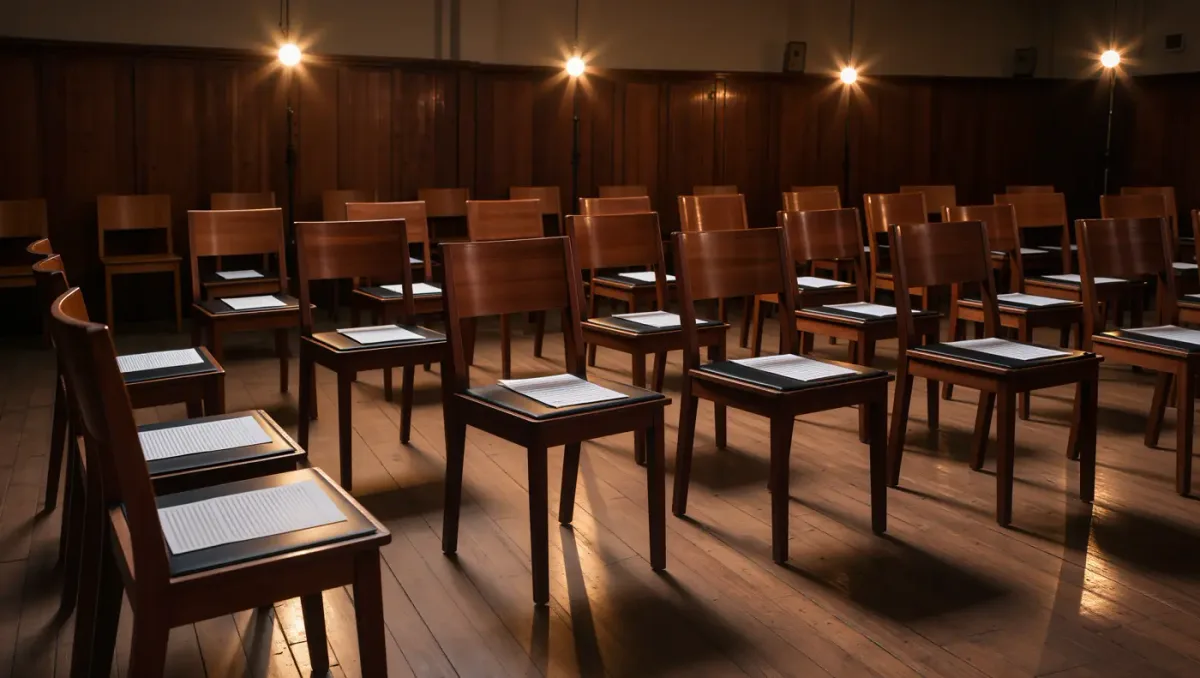
The gay chorus movement began in the summer of 1978, when the San Francisco Gay Men's Chorus gave its first concert — months before Stonewall's tenth anniversary, per documented chorus history — and within two years the model had spread across the country. Miami joined early: South Florida's LGBTQ+ choral organizations have performed continuously in the region since the early 1980s, per their published histories, making the chorus one of the community's oldest continuously operating institutions — and its most intergenerational, with members spanning decades of ages at every rehearsal.
Why did choruses become such a central institution?
Because the format solved several problems at once. Choruses needed no venues, no licenses, and no bar economics — a stage and rehearsal room sufficed — making them among the safest ways for a community under scrutiny to gather publicly. They created mixed-age spaces rare in a bar-defined scene, gave non-performers a participatory art form, and produced concerts that families and coworkers could attend, turning a community's private world into public performance. During the AIDS crisis, choruses across the country became memorial institutions — singing through a decade of losing members — a history documented in the national chorus movement's records and carried in South Florida ensembles' own institutional memories.
What does the South Florida chorus scene look like?
Active and networked. The region supports LGBTQ+ choral organizations in Miami-Dade and Broward — including the Miami Gay Men's Chorus and its Fort Lauderdale counterparts, per their published materials — performing season concerts, pride events, and community collaborations across the year. Both belong to GALA Choruses, the international association of queer choral groups founded in 1982, which connects hundreds of ensembles worldwide and stages a mass festival every few years that draws thousands of singers. Local choruses run auditioned and non-auditioned traditions depending on the group, with seasons typically built around winter and spring concerts.
Related stories: A Short History of Queer Nightlife in Miami · How South Beach Became a Queer Resort Town — and Then Moved On.
What do the concerts actually sound like?
The repertoire spans the expected and the unexpected: pop arrangements and show tunes that audiences sing along to, commissioned new work by queer composers, traditional and sacred music reclaimed from institutions that excluded the singers, and — in South Florida specifically — Latin repertoire reflecting the community's demographics, with Spanish-language programming a recurring feature of regional concerts. Collaborations with other community groups, from orchestras to dance companies, surface regularly in local seasons per published programs.
Why does choral singing matter to the community now?
As the rare institution that spans generations by design. Nightlife segments by age and taste; choruses seat a 22-year-old next to a 70-year-old every week, and the movement's post-pandemic recovery emphasized exactly that function. Choruses also remain participatory rather than consumable — the community singing, not watching — which advocacy-minded researchers of community resilience have long cited as social infrastructure. In a political period when public visibility carries costs, an institution whose core activity is standing together in public and singing has an obvious, durable value.
How does someone join or attend?
Concerts run on season schedules published by each ensemble; winter and spring cycles are the reliable anchors, and pride-season appearances recur across the region. Joining is simpler than most newcomers expect: many groups welcome new members at season starts with no audition, per their published joining information, and rehearsal attendance is the only real commitment. No one needs to read music to start — the tradition's entire premise is that the community's voice, in every sense, is the instrument.