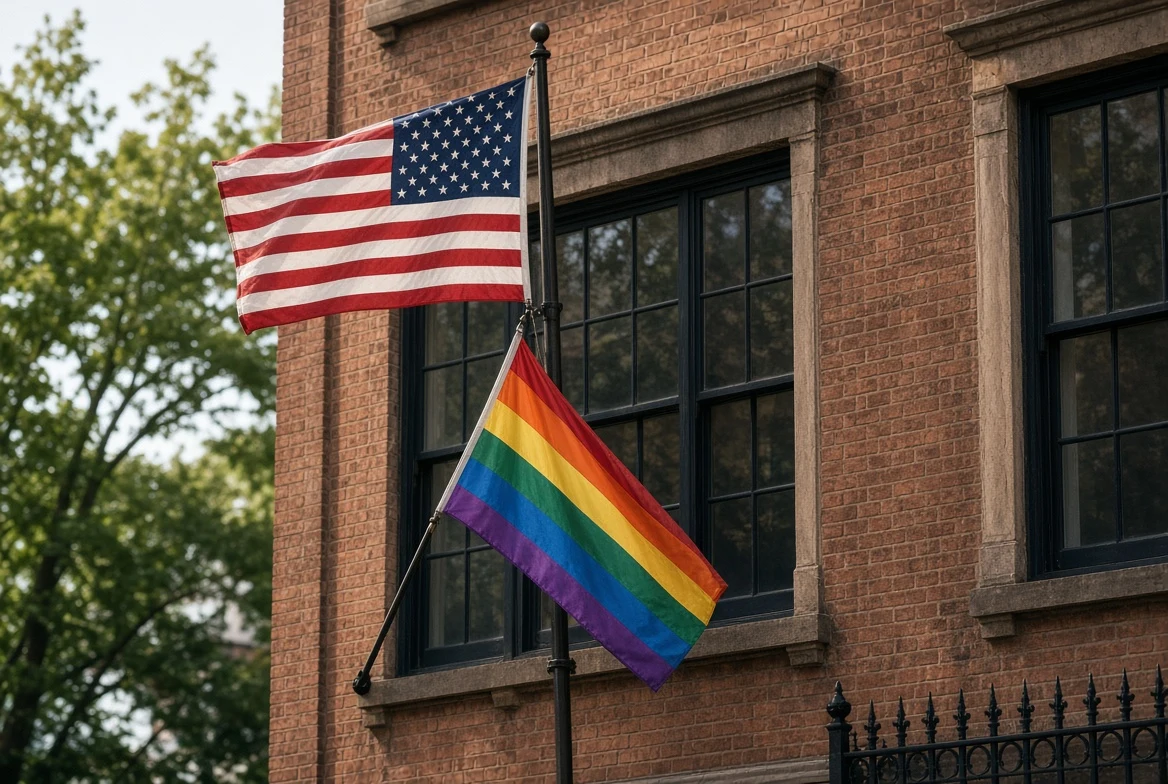
In June 1969, patrons of the Stonewall Inn, a gay bar in New York's Greenwich Village, resisted a police raid that stretched into several nights of protest — the events now widely credited as a catalyst for the modern LGBTQ+ rights movement. Nearly five decades later, in June 2016, President Barack Obama designated the Stonewall Inn and surrounding Christopher Street area a national monument, per the National Park Service, making the site the first U.S. national monument dedicated to LGBTQ+ rights and history. For Miami, the legacy is both national inheritance and local memory: a history that played out here in its own register, from the bars of the 1950s to the political battles of 1977.
Why does a New York event matter in Miami?
Because the movement it catalyzed arrived here fast. The first pride marches held in June 1970, on Stonewall's first anniversary, set the template that South Florida's own observances followed. Miami's LGBTQ+ public life in the 1970s developed in that post-Stonewall momentum — openly gay candidates, community newspapers, and a visible bar scene — and then faced its defining test when, in 1977, Miami-Dade County became the epicenter of a national fight over a gay rights ordinance. The pattern of national triggers and local consequences is precisely the Stonewall legacy at work.
What actually happened at Stonewall?
On June 28, 1969, New York City police raided the Stonewall Inn, a bar operating without a liquor license and serving a clientele that included drag performers, homeless youth, and gay men. Raids on gay bars were routine; that night, patrons and neighborhood residents fought back, and the resistance continued across several nights. Among those present, per later historical accounts, were figures such as Marsha P. Johnson and Sylvia Rivera, transgender and gay liberation activists who became iconic for their lifelong advocacy. The first anniversary march in 1970 — organized by Eastern Regional Conference of Homophile Organizations members — is commemorated as the first pride march.
What does the national monument include?
The Stonewall National Monument, managed by the National Park Service, encompasses the Stonewall Inn bar at 51-53 Christopher Street, Christopher Park across the street, and the surrounding streetscape where the protests unfolded. The designation in June 2016 followed decades of the bar's own history — it was listed on the National Register of Historic Places in 1999 and named a National Historic Landmark in 2000, per NPS records. Visitors today find an operating bar still in business, one of the oldest continuously operating LGBTQ+ venues in the country, alongside park memorials that have become pilgrimage sites.
How does Miami remember its own Stonewall-era history?
Through institutions and archives rather than a single site. HistoryMiami Museum holds materials documenting the county's 1977 ordinance fight, and the Stonewall-era generation of South Florida activists is commemorated in oral history projects and pride programming. The community's memory infrastructure includes the World AIDS Museum in Wilton Manors and community centers that trace their founding to the same era. June proclamations in Miami Beach and Miami-Dade in recent years routinely cite Stonewall as the reason Pride Month exists at all.
Why does Stonewall still matter in 2026?
Because the monument designation settled a question — that LGBTQ+ history is American history, worthy of federal protection — but the living argument continues in local forms: what gets taught in schools, which flags fly at city halls, whether bars from the era survive redevelopment. In South Florida, where the 1977 fight foreshadowed national battles by decades, Stonewall's legacy is less a finished story than a reminder that local memory is where national history actually happens.