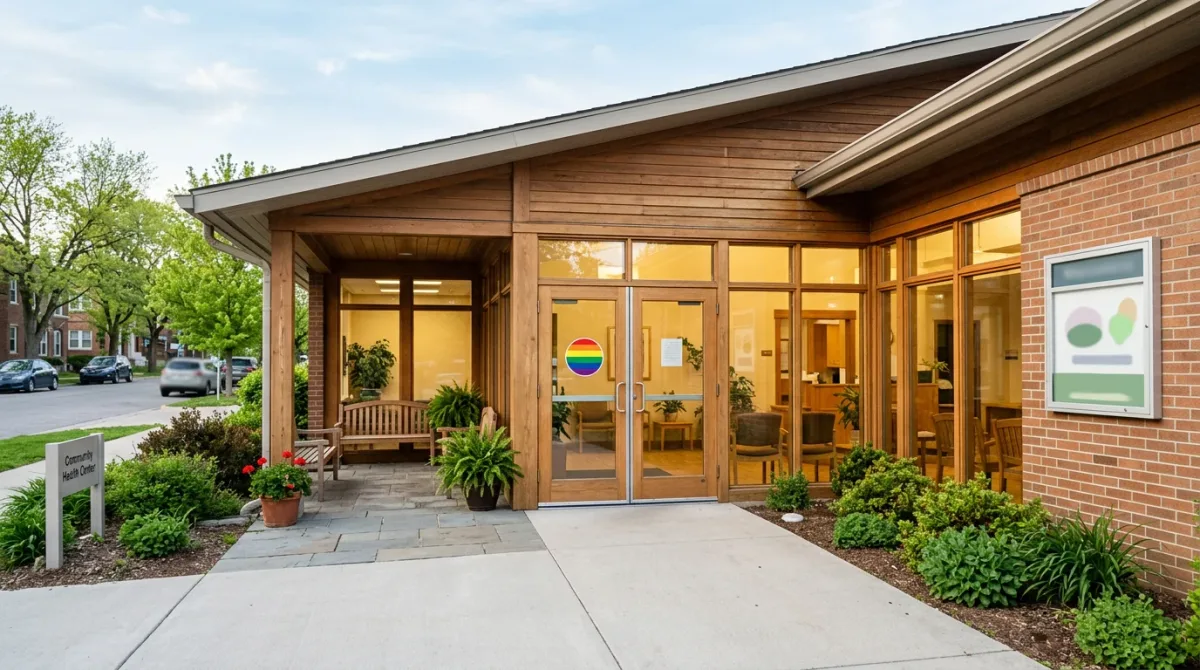
Wilton Manors owes much of its identity as one of the country's most LGBTQ+-concentrated small cities to a single relocation. In 2008, the Pride Center at Equality Park — a longtime South Florida LGBTQ+ community organization — bought a 5.5-acre campus on North Dixie Highway, moving its home base out of Fort Lauderdale and anchoring years of organizing in Wilton Manors.
Where did the Pride Center's roots actually begin?
The organization now known as the Pride Center at Equality Park didn't start in Wilton Manors at all. It was founded in 1993 as the Gay and Lesbian Community Center of South Florida, established by Alan Schubert, described by the organization as a philanthropist and gay pioneer, according to the center's own history page. The original mission was straightforward: give South Florida's LGBTQ+ community a physical, safe space and support the smaller organizations already doing the work.
That first home sat on Andrews Avenue in Fort Lauderdale, not in Wilton Manors, for more than a decade. The center's early years were about building infrastructure — a fixed address, a staff, a board — for a community that had mostly organized through bars, churches, and informal networks up to that point.
Why did the center leave Fort Lauderdale for Wilton Manors?
Timing and real estate. The center's board sold the Andrews Avenue property in 2005, during a strong South Florida real estate market, according to the organization's own account of its history. Three years later, in 2008, the board used that capital to acquire a 5.5-acre campus in Wilton Manors — considerably more room than the Fort Lauderdale site had offered, and a foothold in a city that was already drawing LGBTQ+ residents and businesses to its main commercial strip.
The move wasn't cosmetic. A 5.5-acre campus is a different kind of institution than a single downtown building, and it gave the organization room to grow into the kind of multi-service hub it is today.
What changed when it became the Pride Center at Equality Park?
After a $1 million renovation of what the organization calls the Schubert Building — named for founder Alan Schubert — the center reopened in 2009 under its current name, the Pride Center at Equality Park. The organization has said the rebrand was meant to reflect “our inclusivity of a diverse community,” moving the name away from a narrower “Gay and Lesbian” framing toward one meant to cover the fuller LGBTQ+ community it served.
Today the Equality Park campus, at 2040 North Dixie Highway, provides roughly 30,000 square feet of meeting space, offices, and program rooms, according to the Pride Center's own materials. The center's stated mission has grown alongside the building: addressing what it describes as the LGBTQ+ community's “distinct health, social, educational, socio-economic and safety needs,” rather than functioning only as a social gathering space.
How large is Wilton Manors' LGBTQ+ community today?
The most current government snapshot doesn't break Wilton Manors' population down by sexual orientation or gender identity — the U.S. Census Bureau doesn't collect that data at the city level — but the demographic numbers still hint at the makeup of a city long associated with gay male residents in particular. As of July 2025, the Census Bureau estimated Wilton Manors' population at 11,655, up from 11,435 at the 2020 census. Only 33.5% of residents are recorded as female, meaning roughly two-thirds of the city's population is male — a lopsided split rarely seen in a city this size. The population also skews older, with 22.9% of residents 65 or older against just 6.5% under 18, and it's well educated: 45.2% hold a bachelor's degree or higher.
None of that data proves how many residents identify as LGBTQ+. But taken together with the Pride Center's campus, the concentration of LGBTQ+-owned businesses along Wilton Drive, and decades of organizing history, it's consistent with a city that built its modern identity around that community rather than acquiring it by accident.
Where else does South Florida keep its LGBTQ+ history?
A few miles from Wilton Manors, in Fort Lauderdale, the Stonewall National Museum, Archives & Library has operated for more than 50 years, tracing its roots to the early 1970s. The organization describes itself as the first national LGBTQ+ museum in the country and says it holds one of the largest LGBTQ+ archival and library collections in the United States, alongside oral histories and traveling exhibitions. It's a separate institution from the Pride Center, but the two sit within a few miles of each other — a small geographic cluster of LGBTQ+ institutional history that's unusual outside a handful of American cities.
Together, the Pride Center's 2008 move and the Stonewall museum's decades of archival work explain a lot about why this stretch of Broward County, more than most, has become a place where LGBTQ+ history isn't scattered — it's collected, staffed, and open to the public.
For a related culture perspective, read Why Wilton Manors Is Called South Florida's Island City.
For more context, read How Miami Fought Back in 1977 and Changed LGBTQ+ History.